Bedding • Size and care guide
Naturepedic Duvet Covers: How to Choose the Right Size and Layering Setup
A duvet cover should do more than fit the bed. It should hold its insert in place, sit comfortably over the sleeper, and work with the sheets and blankets beneath it. Getting those relationships right can make a linen bed feel composed rather than cumbersome.
Published November 1, 2026
There is a small but familiar frustration in bedding: the duvet looks settled when the bed is made, then gathers into a lopsided bundle overnight. One corner goes slack; another becomes overfilled. The cover may be the wrong size, the insert may be shifting, or the layers underneath may be working against one another.
With a Naturepedic organic linen duvet cover, the answer begins with measurements, not appearance. The cover is offered in Full/Queen and King/California King dimensions. Its corner ties help secure a comforter, while the fabric’s breathable, textured character makes it a natural candidate for a simple, adjustable bedding system. These features are useful, but they cannot compensate for an insert that is substantially too large or too small.
This guide explains how to compare cover and insert dimensions, use corner ties effectively, and build a bedding setup that can adapt as the room and season change. The goal is not a showroom-perfect bed. It is a cover that stays in place and layers that feel comfortable in actual use.
Start with the measurements, not the bed label
Bed-size names are convenient shorthand, but they are not a guarantee that two bedding pieces will have identical dimensions. A “queen” insert from one maker may not match another maker’s queen duvet cover exactly. The difference can be slight or noticeable, depending on the product, the fabric, and how full the insert is.
The Naturepedic duvet cover dimensions supplied for this range are 90 by 92 inches for Full/Queen and 106 by 92 inches for King/California King. Before choosing, check the dimensions printed on the insert itself, not only the bed size on its label. Compare length with length and width with width. If you already own the insert, lay it flat and measure it from edge to edge without stretching or compressing the filling.
A close match generally gives a more controlled appearance and helps limit excess fabric inside the cover. But “close” does not mean that every cover and insert must be identical down to the last fraction of an inch. Loft, construction, and the way an insert is filled affect how the finished duvet sits. A lofty insert can occupy more of a cover’s interior than a thinner one with the same stated dimensions.
When the measurements differ, consider both the amount and direction of the difference. An insert that is a little smaller than its cover may leave a softer, more relaxed drape, but too much extra room can make the filling migrate and leave unfilled pockets. An insert that is too large can strain the seams, distort the cover, and make it difficult to close. The best result is usually a compatible pair rather than a deliberate mismatch.
- Read the actual cover dimensions and insert dimensions before buying.
- Check whether a product’s size label combines two bed sizes, such as Full/Queen.
- Allow for the insert’s loft and construction, not just its flat measurements.
- Confirm that the cover’s closure and corner ties suit the insert you plan to use.
Also consider the mattress. A deep mattress, a tall foundation, or a bed frame that raises the sleeping surface can change how much of the duvet falls along each side. The cover’s dimensions remain the same, but its visual and practical coverage may feel different on a low-profile bed than on a taller one. If generous side drape matters to you, measure the mattress and account for the drop you want on both sides.
How the right fit should feel
Fit is not solely a matter of appearance. A duvet that stays evenly filled is easier to arrange, less likely to leave a cold gap, and less irritating to reset each morning. The cover should enclose the insert without pulling tightly across its surface. When laid flat, the fabric should look reasonably even, without taut corners or large, empty channels.
Too much room can create a different problem. If the insert is markedly smaller than the cover, the outer linen may look full at the edges while the inner comforter has slid toward the middle. The result is a cover that twists or collapses in sections. That does not mean a relaxed drape is a flaw; it means the drape should come from the fabric and the styling, not from an insert wandering loose inside it.
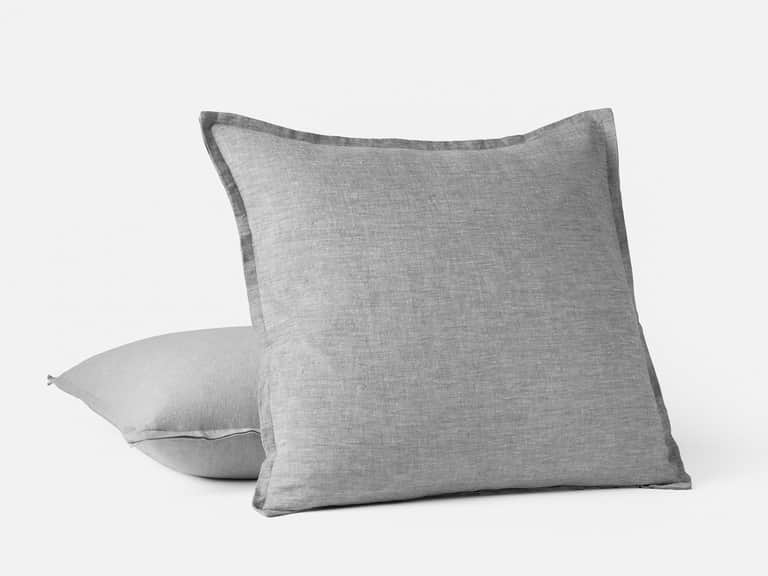
Linen has a distinct, softly textured surface and a natural fall. Naturepedic’s organic linen duvet covers are described as stone-washed, a finish associated with a softer, lived-in hand. That relaxed character can suit a less formal bed. It does not require a perfectly pressed surface, nor does it make a poor size match irrelevant. A balanced insert gives linen room to drape without making the whole bed look untidy.
Pay attention to what happens after a night’s sleep. If the duvet repeatedly shifts to one side, first check that each tie is attached to the corresponding insert corner. If the ties are secure but the filling still moves substantially, reassess the size compatibility and the insert’s construction. A cover can restrain an insert, but it cannot change its dimensions or shape.
Corner ties: small details, useful work
Corner ties are fabric ties inside a duvet cover that connect to matching loops or attachment points on the insert. Naturepedic’s duvet set includes corner ties intended to hold the comforter in place. Used correctly, they can reduce shifting toward the foot or sides of the bed and help the insert remain more evenly distributed.
Start by turning the cover inside out. Locate its interior ties, then find the corresponding corners or loops on the insert. Tie each pair securely enough to stay attached, but not so tightly that the insert is pulled into a narrow point. When all four corners are connected, turn the cover right side out and shake the duvet gently to distribute the filling. If the insert has no loops, follow its care or use instructions rather than improvising a fastening method that could damage the fabric.
Corner ties are anchors, not a substitute for a compatible fit. If the insert is much smaller than the cover, tying the corners may keep the edges connected while leaving excess space between them. If the insert is too large, ties can make the tension more obvious. In both cases, the underlying size mismatch remains.
Some people find it easiest to secure the two far corners first, then reach into the cover to tie the remaining corners before closing the duvet. Others prefer to spread the insert on top of the inside-out cover, tie all corners, and roll the cover and insert together before turning the cover right side out. Either approach can work; the important part is matching each corner and checking that the insert lies evenly once enclosed.
After laundering, inspect the ties and the corresponding attachment points for loose stitching or damage. Gentle handling helps preserve the construction. If a tie is missing or a loop has come undone, avoid pulling harder on the remaining connections; doing so can concentrate stress in one area.
Build the bed in layers, from the mattress up
A comfortable bed is a sequence of surfaces rather than a single textile choice. The fitted sheet sits closest to the sleeper, followed by an optional flat sheet, then the duvet and its cover. Additional blankets or a lightweight coverlet can be added when needed. Each layer affects warmth, movement, and the feel of the one above it.
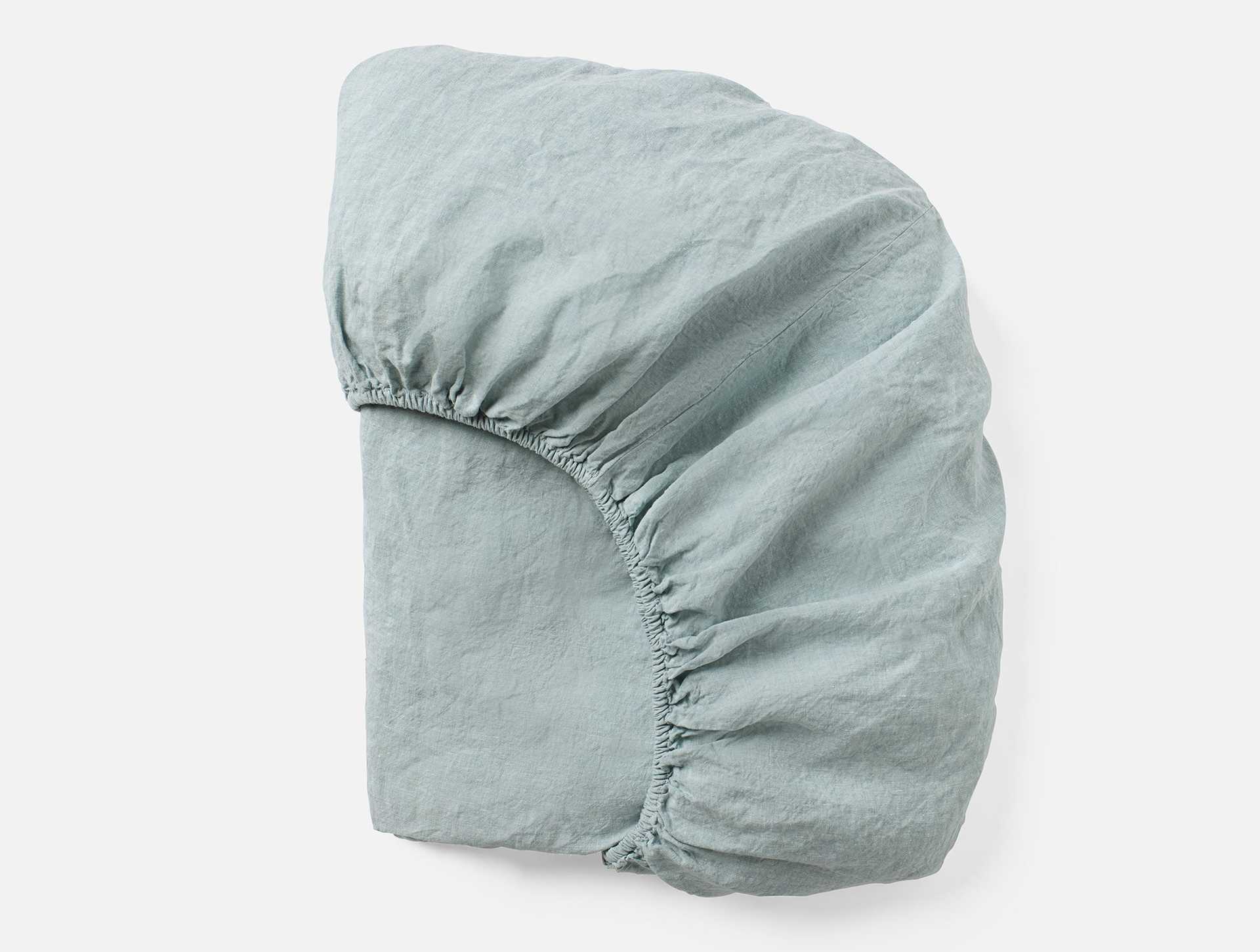
Begin with a fitted sheet that matches the mattress depth. A sheet that is too shallow can pull loose at the corners; one with a generous pocket and full elastic may be easier to secure on a deeper mattress. An organic linen fitted sheet, such as the Organic Relaxed Linen Fitted Sheet, is described as having a 15-inch pocket and full elastic. Those details illustrate why pocket depth and construction matter: the fitted sheet has to stay put before the duvet can do its own job.
Next, decide whether a flat sheet belongs in your routine. It adds a light barrier between the sleeper and duvet, and it can be removed or laundered separately. Some sleepers like the extra layer; others prefer the direct feel of a duvet cover. Neither arrangement is universally better. The right choice depends on comfort, laundry habits, climate, and how easily you want to adjust the bed overnight.
The duvet comes above the sheets. If the insert is warm and the room is mild, the linen cover may be all the top layer you need. During colder periods, a light blanket can sit below the duvet, where it adds warmth without requiring a heavier insert. In warmer weather, remove the blanket or use it folded at the foot of the bed. This modular approach is often more adaptable than relying on one very heavy layer throughout the year.
Keep decorative pillows and throws separate from the sleep system in your mind. They can add texture or color, but they do not determine whether the duvet is correctly sized or whether the sleeping layers feel comfortable. A simple bed with well-matched essentials can be easier to maintain than one crowded with textiles that are difficult to move or wash.
Breathability and the feel of organic linen
Flax linen is valued for its textured feel and airflow. Naturepedic describes its organic linen duvet covers as breathable and made from certified organic flax grown in France. The supplied product information lists a fabric weight of 185 grams per square metre and notes that the covers are made in India in a GOTS-certified organic facility. These details can help readers understand the material and its sourcing, but they do not predict precisely how warm any individual sleeper will feel.
Temperature comfort depends on more than the cover. The duvet insert’s filling and weight, the room’s temperature, humidity, the sleeper’s own comfort preferences, and the number of layers all matter. A breathable cover can be part of a balanced setup, but it is not a thermostat. If you tend to overheat, consider reducing layers or selecting a lighter insert as well as choosing a breathable cover.
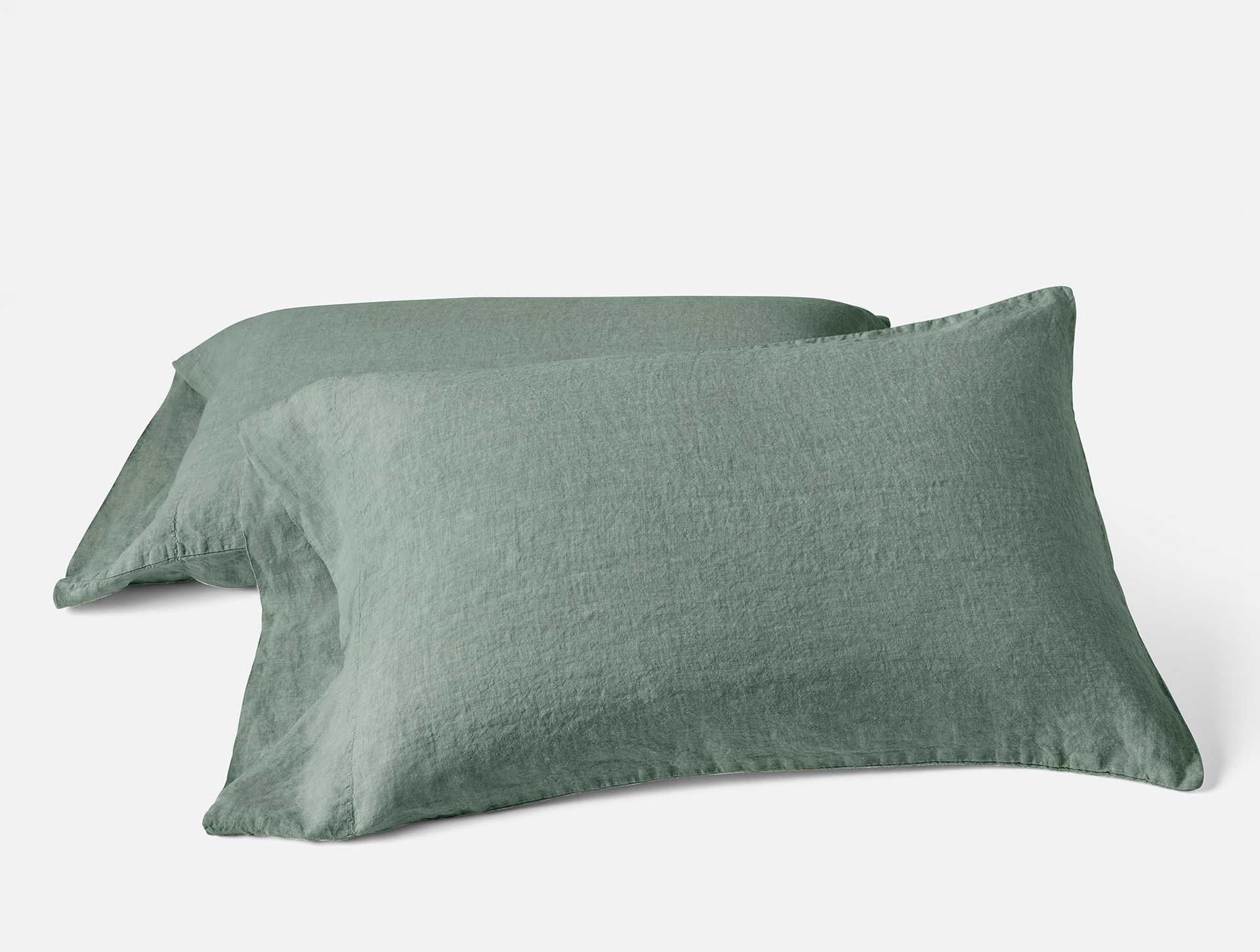
Linen’s surface can feel more textured than a smooth cotton percale or sateen. That texture is part of its appeal for many people, and the fabric is described as becoming softer with washing. If you are new to linen, give the material some time rather than expecting it to feel identical to another weave from the first night. A relaxed finish may also look naturally rumpled. That is different from a cover that is twisted, strained, or bunched because its dimensions do not suit the insert.
There is no need to add multiple blankets simply because a cover feels substantial in the hand. Consider the insert’s warmth and the room’s conditions, then add a layer only if you need it. A thinner, flexible system is easier to adapt: one fitted sheet, a flat sheet if preferred, and a duvet that can be supplemented with a removable blanket.
A practical seasonal setup
Seasonal bedding does not have to mean replacing the whole bed. Keep the core pieces consistent and change the layers around them. Linen sheets and a linen duvet cover can remain in rotation while the insert, blanket, or flat sheet changes according to the room and the sleeper’s comfort.
In warmer months, use fewer layers. A fitted sheet and duvet cover around a light insert may be enough; if the duvet feels too warm, fold it back or substitute a lighter covering. In a cooler room, add a blanket beneath the duvet so warmth can be adjusted without changing the cover. During transition seasons, a flat sheet can offer a modest extra layer that is easy to remove.
These are starting points, not fixed rules. A cool room, a warm sleeper, or a high-loft insert can alter the equation. Rather than making a complete change at once, adjust one layer and observe how the bed feels over several nights. That small test can help identify whether the problem is the cover, the insert, or simply too much bedding.
- Warm weather: reduce layers and choose a lighter insert if needed.
- Cool weather: add a removable blanket or warmer insert rather than automatically adding several heavy covers.
- Changeable temperatures: keep an easily removed layer within reach.
- Any season: secure the insert ties and check that the duvet remains evenly filled.
Care that supports a longer useful life
Follow the care instructions supplied with the specific cover. For Naturepedic’s organic linen duvet covers, the product information calls for machine washing in warm water, tumble drying on low, warm ironing if desired, and no bleach. A care label takes precedence over broad advice, especially when bedding includes different fibers, colors, or finishes.
Wash the cover with similar colors and avoid overloading the machine. A crowded drum can prevent large bedding from moving freely through the wash and rinse cycles. Use an appropriate amount of detergent and avoid harsh bleaching agents. If you tumble dry, low heat is the specified approach; remove the cover promptly to limit unnecessary creasing. A warm iron is optional if a smoother finish is preferred, but linen’s natural texture does not require a crisp press.
Before washing, check that the cover is unfastened and turned as recommended by its care label. After drying, reconnect the corner ties carefully rather than pulling them taut. Store bedding completely dry in a clean, breathable place. These ordinary steps can help maintain the fabric and its construction without making care more complicated than it needs to be.
For everyday upkeep, straighten the duvet and redistribute its filling when making the bed. If it begins to bunch, deal with the cause rather than simply pulling the outside fabric into shape. Recheck the ties, corners, and fit. Small corrections are easier than trying to restore an insert that has migrated far inside its cover.
Common sizing and layering mistakes
Choosing by bed size alone. A size label may not tell the full story. Compare the cover and insert dimensions directly, especially when the label combines two sizes.
Assuming bigger is always better. Extra fabric can create a relaxed drape, but excess room inside the cover may allow the insert to shift. A substantially oversized insert can strain seams and closures.
Treating ties as a complete solution. Corner ties help anchor the insert, but they cannot fix a major size mismatch. Tie all corresponding corners and check the result after turning the cover right side out.
Adding layers without testing them. Several thin layers can offer flexibility, but they can also trap more warmth than expected. Add or remove one layer at a time and pay attention to how the bed feels during actual sleep.
Overlooking mattress height. A mattress’s depth and the desired side drop affect the finished appearance. Measure the bed if coverage is a priority; do not assume a duvet’s labelled size will create the same drape on every mattress.
A short checklist before you make the bed
- Confirm that the duvet cover and insert are compatible in both width and length.
- Check the cover’s closure and make sure all corner ties can reach their matching attachment points.
- Secure each corner without pulling the insert into a tight point.
- Spread the filling evenly after turning the cover right side out.
- Use a fitted sheet with a pocket depth appropriate to the mattress.
- Choose a flat sheet, blanket, or additional layer according to comfort rather than habit alone.
- Follow the care label for washing, drying, ironing, and bleach restrictions.
The right setup is the one that stays comfortable
A well-made bed begins with a straightforward match: a duvet cover that suits its insert, ties that connect securely, and layers that serve a clear purpose. Naturepedic’s organic linen covers offer defined Full/Queen and King/California King dimensions, corner ties, and a breathable flax fabric. Used with a compatible insert, these features can support a bed that looks relaxed without becoming disordered.
Take measurements before choosing, rather than relying on the bed-size name alone. Tie the insert at each corner and judge the fit after it is inside the cover. Then build the rest of the bed around the conditions of the room and the comfort of the sleeper. Linen brings texture and a natural drape; careful sizing and restrained layering let those qualities work in everyday life.
The result need not be elaborate. A fitted sheet, an optional flat sheet, and a duvet that stays evenly filled are enough for many beds. Add a blanket when the room calls for it, remove one when it does not, and let the materials do their quiet work.